The chapel
The Residenz court chapel explained
The history of the court chapel in Munich's Residenz: who built it and when, how it was arranged for the court, and what its altars and stucco show.
Reserve a place in the chapel ↗Quick answer
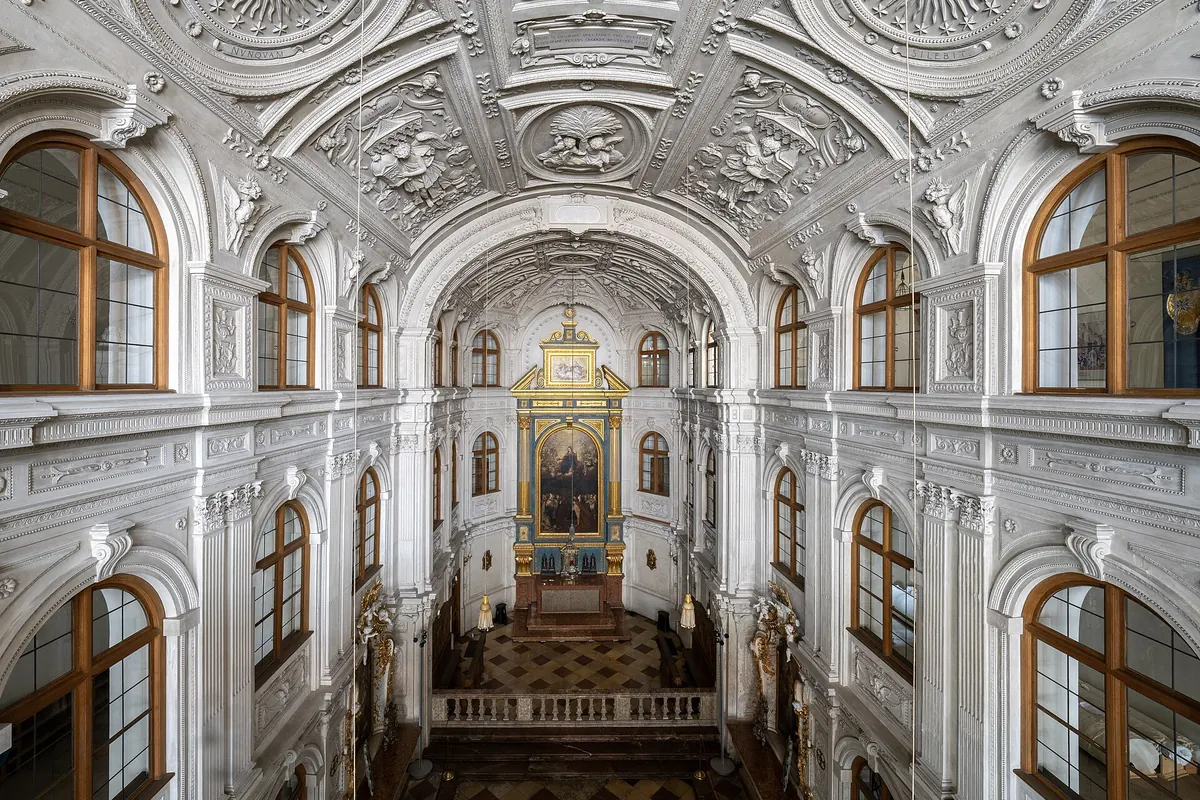
The court chapel of Munich's Residenz was built for Maximilian I in 1601–1603 to replace older prayer rooms in the castle. It has two storeys: the court prayed below, and the ruling family heard Mass from galleries. A choir was added in 1630. It is dedicated to the Immaculate Conception, and its high altar shows the Virgin in glory beneath the Trinity.
Built for Maximilian I
The Residenz served as the seat of government and residence of the Bavarian dukes, electors and kings from 1508 to 1918. It grew from a castle begun in 1385 on the north-eastern edge of the medieval city, known as the Neuveste. Maximilian I, who ruled from 1598 and became an elector in 1623, enlarged the palace again and had a new two-storey court chapel built between 1601 and 1603. It replaced older devotional rooms in the Neuveste. The chapel is therefore a young room by the standards of the palace, which has parts dating from the 14th century.
Read next: Music rooms of the Munich Residenz
Two floors for two audiences
The chapel was arranged by rank. Members of the court gathered on the ground floor, while the ruling family followed the daily Mass from galleries that they could reach easily from their apartments. Today the palace admits museum visitors only to the gallery, the level that the ruling family used. A choir was added in 1630. Seen from the gallery, the room reads as a tall box lit by arched windows, with the altar at the far end and the pews below. A concert puts you in the same room, though the booking page does not say on which level the seats are.
Dedicated to the Immaculate Conception
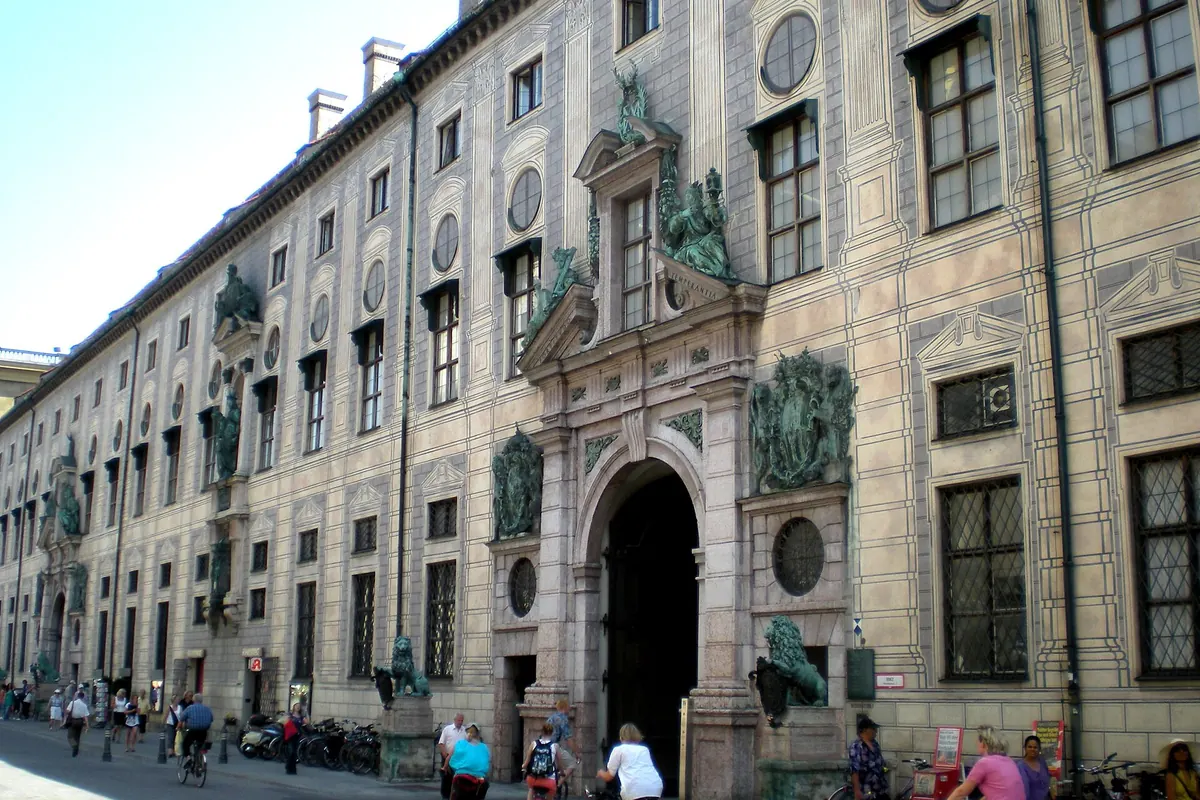
The chapel is dedicated to the Virgin of the Immaculate Conception. The palace's own account says the choice was probably Maximilian's, because he had already adopted the Virgin Mary as patron saint of the Wittelsbach dynasty and of Bavaria. The same devotion shows on the outside of the Residenz: its west front on Residenzstraße has a statue of the Virgin Mary as patroness of Bavaria in a niche between the portals, and the portals are guarded by lions. The chapel's dedication is therefore part of a larger statement made by the whole palace front.
The altars
The large central painting of the high altar is by the court painter Hans Werl, made around 1600. It shows the Virgin enthroned in glory beneath the Trinity. In the middle of the 18th century two masters of South German Rococo, Johann Baptist and Franz Zimmermann, made the two side altars next to the choir. So the room holds two periods of work: the late Renaissance and early Baroque of the high altar and the Rococo of the side altars. The gilded frame of the high altar is the brightest object in the room, and the one that photographs of the chapel centre on.
The stucco
Plaster ornament covers the walls and vault, and it is the first thing most visitors notice. According to the German Wikipedia article on the Residenz, the chapel was consecrated in 1603, its rich stucco decoration was completed in the vault in 1614, and the choir's stucco was matched to the older work after 1630. Panels of relief hold coats of arms, angels and foliage, and ribs divide the vault into fields. The white colour is part of the effect, since it makes the gilded altar the single warm note in an otherwise pale room.
A palace rebuilt
The Second World War was catastrophic for the Residenz. In March and April 1944, much of the upper storey and numerous vaulted ground-floor rooms were gutted, though most of the movable inventory had been taken out beforehand. The palace administration set up a building office in May 1945, and the reconstruction took several decades. The Residenz Museum had opened in 1920, and further sections reopened in stages from 1958 to 1985. The palace's public account does not say how the chapel itself fared in the war, so this guide does not either, and it describes only the room as it stands today.
Frequently asked questions
When was the court chapel built?
In 1601–1603, under Maximilian I. A choir was added in 1630.
Who is it dedicated to?
To the Virgin of the Immaculate Conception, a choice the palace ties to Maximilian I.
Can museum visitors enter the chapel?
Only the gallery is open to museum visitors. A concert is the other way to be in the room.
Who painted the high altar?
The court painter Hans Werl, around 1600. It shows the Virgin in glory beneath the Trinity.
Sources